

Keep your doodle active: top exercise tips for happy dogs
Elina here, and if you share your home with a floofy doodle, you already know the struggle. These dogs are smart, energetic, and absolutely full of life. One walk around the block? Not going to cut it. Doodle breeds need both physical activity and mental challenges to stay balanced and happy. Without enough of both, you might find your couch cushions mysteriously destroyed. This article walks you through how to choose the right activities, which exercises doodles love most, how to compare your options, and how to build a routine that actually works for your dog’s age and personality.
Table of Contents
- How to choose the right exercise for your doodle
- Top exercise activities doodles love
- Comparison of exercise activities for doodles
- Customizing your doodle’s exercise routine
- Our take: Why consistency beats intensity for doodle exercise
- Keep your doodle healthy and happy with Dood Woof essentials
- Frequently asked questions
Key Takeaways
| Point | Details |
|---|---|
| Tailored routines matter | Matching exercise type and schedule to your doodle’s age and personality helps prevent injuries and boredom. |
| Mix physical and mental play | Combining fetch, agility, and puzzle games meets a doodle’s need for movement and stimulation. |
| Consistency beats intensity | Regular short sessions deliver better results than occasional exhausting workouts. |
| Groom after exercise | Effective grooming routines support a healthy, happy, and tangle-free doodle after activity. |
How to choose the right exercise for your doodle
Now that you know what you’ll learn, let’s start by figuring out how to select the best activities for your individual dog. Not every doodle is the same, and that matters more than most owners realize.
The first thing to consider is your dog’s age, health, and current energy level. A bouncy one-year-old Goldendoodle and a calm seven-year-old Labradoodle need very different routines. Puppies have growing joints that can’t handle long runs or repetitive jumping. Seniors need gentle movement that keeps them mobile without pushing too hard. Adults in their prime are usually up for almost anything.
Doodles are energetic dogs that benefit from a mix of mental and physical stimulation, so think beyond just physical movement. Activities like agility courses, scent games, and training and enrichment tips challenge their minds while also burning energy. A mentally tired doodle is often a calmer, better-behaved dog.
Your living space and local weather also play a role. If you’re in an apartment with no yard, you’ll need indoor-friendly options on rainy days. If you live near trails or a lake, your doodle has a wider range of options available.
Here are key factors to keep in mind when choosing activities:
- Age and joint health: Avoid high-impact exercises for puppies under one year
- Energy level: Match activity intensity to how your dog is feeling that day
- Mental needs: Include at least one brain-engaging activity per session
- Space available: Have both indoor and outdoor options ready
- Weather: Hot pavement can burn paws; cold temps affect seniors more
Pro Tip: Instead of one long outing, aim for 2 to 3 shorter sessions spread across the day. This keeps energy levels more stable and reduces the risk of overexertion.
Watch for signs your doodle is getting too much exercise, like limping, heavy panting, or extreme lethargy after activity. Too little exercise often shows up as destructive behavior, restlessness, or excessive barking.
Top exercise activities doodles love
With those selection criteria in mind, let’s explore the most enjoyable and effective exercise options for doodles. These activities are tried and true favorites for this breed group.
“Fetch, agility, and interactive play are ideal for engaging doodle breeds, as they combine movement with mental focus.” — AKC exercise guidance
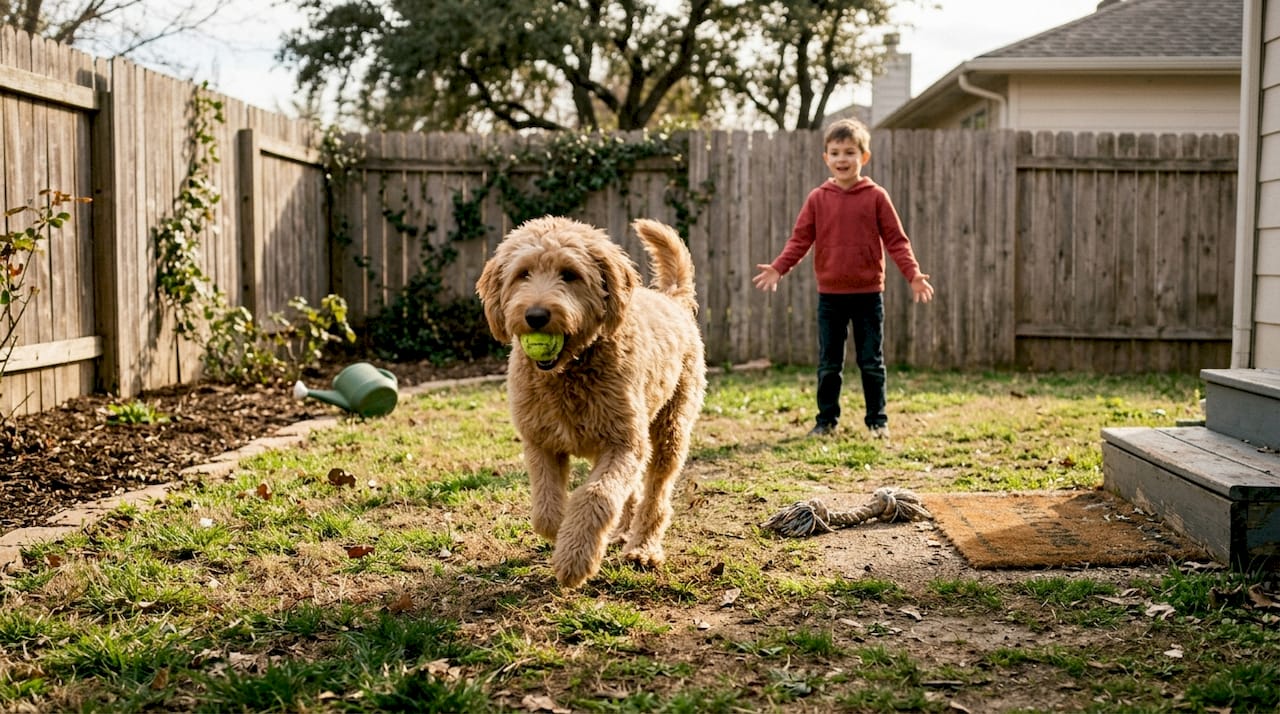
- Fetch: Simple but effective. Start with 10 to 15 throws in a safe, enclosed area. Use a ball or frisbee and gradually increase repetitions as your dog builds stamina.
- Agility training: Set up a basic course with tunnels, jumps, and weave poles. Even backyard setups improve coordination and confidence. Start with one obstacle at a time.
- Scent work: Hide treats around the house or yard and let your doodle sniff them out. Just 15 minutes of this can tire out a high-energy dog more than a 30-minute walk.
- Swimming: Most doodles take to water naturally. Swimming is low-impact and excellent for dogs with joint sensitivity. Always supervise and use a dog life vest for safety.
- Hiking: Trail walks engage your doodle’s senses in ways a neighborhood stroll never will. Start with shorter, easy trails and build up distance over time.
- Puzzle and enrichment games: Treat-dispensing toys and interactive feeders count as real exercise for the brain. Rotate puzzles regularly so they stay challenging.
Pro Tip: Use high-value treats or a favorite squeaky toy to introduce new activities. Positive associations make your doodle more willing to try something unfamiliar.
When introducing any new exercise, keep early sessions short and fun. Five to ten minutes of a new activity is plenty at first. Build duration only once your dog seems comfortable and enthusiastic.
Comparison of exercise activities for doodles
Now that you know the best activities, let’s compare them to help you decide which to prioritize for your doodle. This side-by-side view makes it easy to pick the right fit for your schedule, space, and dog.
Dogs benefit from at least 30 to 60 minutes of daily physical activity, and mixing physical and cognitive exercise boosts overall dog health. That means the best weekly plan combines activities from multiple categories.
| Activity | Energy output | Mental stimulation | Indoor option | Best for |
|---|---|---|---|---|
| Fetch | High | Low | No | Yards, parks |
| Agility | High | High | Partial | Active owners |
| Scent work | Low to medium | Very high | Yes | All ages |
| Swimming | High | Medium | No | Joint-sensitive dogs |
| Hiking | Medium to high | High | No | Adults, nature lovers |
| Puzzle games | Low | Very high | Yes | Rainy days, seniors |
Looking at the table, scent work and puzzle games stand out for rainy days or when your doodle needs mental and physical stimulation without leaving the house. Fetch and swimming deliver the most physical output in the shortest time. Agility and hiking offer the best all-around combination of body and mind.
For owners with limited time, a 20-minute fetch session plus 10 minutes of scent work covers both physical and cognitive needs in one efficient block. That’s a great default option for busy weekdays.
If you have a small yard or apartment, lean on puzzle games and indoor hide-and-seek during the week, then schedule longer outdoor sessions on weekends. Flexibility is the key to keeping any routine sustainable.
Customizing your doodle’s exercise routine
Comparing options is helpful, but customizing your routine guarantees the best outcome for your doodle. A plan tailored to your dog’s age and personality is far more effective than a generic one-size-fits-all schedule.
Routine variation keeps highly intelligent breeds like doodles more engaged and prevents the boredom that leads to destructive behavior. Rotating activities every few days also reduces repetitive strain injuries from doing the same movements over and over.
Here’s a sample weekly routine by age group:
| Age group | Daily duration | Recommended activities |
|---|---|---|
| Puppy (under 1 year) | 15 to 30 min | Short walks, gentle play, basic scent games |
| Adult (1 to 7 years) | 45 to 90 min | Fetch, agility, hiking, swimming, puzzle games |
| Senior (7+ years) | 20 to 40 min | Leisurely walks, scent work, low-impact puzzle games |
For practical enrichment ideas that fit into any age group, variety is your best tool. Swap out activities every few days to keep your doodle guessing.
Always watch your dog’s body language during and after exercise and play recommendations. These are the warning signs of overexertion to look for:
- Excessive panting that doesn’t slow down within a few minutes of rest
- Lagging behind or refusing to continue
- Limping or favoring one leg
- Glassy eyes or unusual stumbling
- Vomiting or drooling excessively
If you notice any of these signs, stop the activity immediately, offer water, and let your doodle rest in a cool spot. If symptoms continue, contact your vet.
Our take: Why consistency beats intensity for doodle exercise
Having covered the best practices and customization, here’s our take based on expert insights and real experiences shared by doodle owners in our community.
We see a pattern again and again. Owners go big on the weekend with a two-hour hike and then skip exercise entirely on Monday through Friday. The doodle acts out, chews things, barks constantly. The owner assumes the dog needs more exercise. More big outings happen. The cycle repeats.
Here’s what actually works: short, consistent, mentally engaging sessions every single day. A 20-minute scent game Tuesday afternoon does more for your doodle’s behavior than a three-hour Saturday adventure. Doodles are routine-oriented. They thrive when they know what to expect and when variety is built within a consistent structure.
Consistency in timing and variety in activity is the most powerful combination for doodle wellbeing.
We’ve heard from countless doodle owners who saw dramatic behavior improvements within two weeks of switching to shorter daily sessions. Less barking. Fewer zoomies at midnight. A calmer, more focused dog. Doodle enrichment strategies that layer mental and physical engagement into everyday moments are genuinely transformative. Trust us on this one.
Keep your doodle healthy and happy with Dood Woof essentials
To complete your dog’s wellness routine, pair regular exercise with proper grooming. Active doodles get muddy, tangled, and sweaty fast. Their gorgeous coats need some love after every adventure.

At Dood Woof, we’ve got you covered for post-exercise care. Our Doodle Detangler Spray works through knots and debris quickly, so brushing after a hike or swim session is far less of a battle. For bath days, our 5-in-1 Doodle Shampoo cleans, conditions, and soothes sensitive doodle skin in one step. Both products are made with natural, human-grade ingredients and free from harsh chemicals. Your doodle works hard out there. Give their coat the gentle care it deserves.
Frequently asked questions
How much daily exercise does a doodle need?
Most doodles need at least 30 to 60 minutes of physical activity each day, plus mental stimulation through games or training to stay balanced and calm.
Can I exercise my doodle indoors if the weather is bad?
Absolutely. Enrichment games provide significant exercise indoors, and activities like hide-and-seek, scent work, and puzzle feeders are great options when it’s too rainy or cold to go outside.
What are warning signs my doodle might be overexercised?
Watch for heavy panting, limping, or reluctance to continue play. Monitor for exhaustion in highly active dogs and adjust your routine if any of these signs appear.
Are certain exercises better for doodle puppies or seniors?
Yes. Gentle play, short walks, and puzzle games are safest for both groups. Age-appropriate exercise reduces injury risk and keeps both puppies and seniors moving comfortably without overstressing their joints.